

PATH OF INTEGRATION
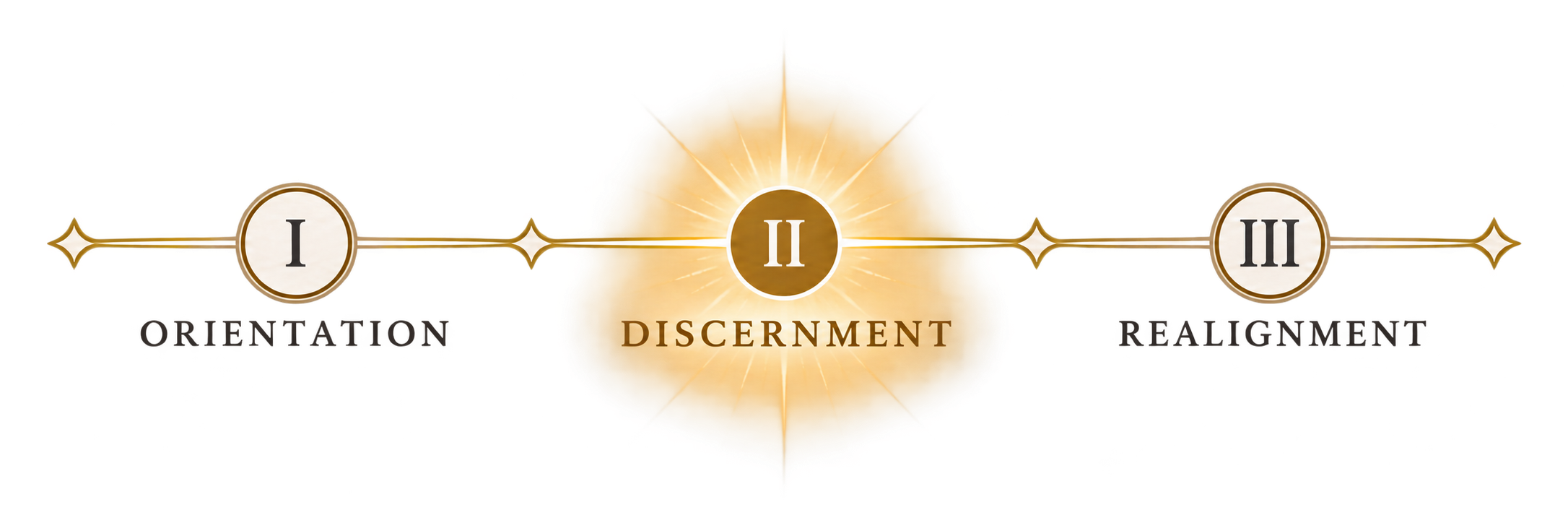
II: DISCERNMENT

Listen More Closely

Not every thought is truth. Not every feeling is instruction. Not every familiar voice is your own.
Discernment begins when we create enough space to notice the difference between what is actually present and what we are adding to it — so we can respond with greater clarity, intention, and trust in our own inner knowing.
EXPERIENCE & INTERPRETATION

Can I notice the difference without needing to reject either?
Life unfolds in layers. We experience the world directly, and then our minds quickly begin to make meaning out of what has happened. Neither is wrong — but they are different.

WHAT AM I ADDING?

What story, assumption, expectation, judgment, or prediction followed?


WHAT IS HERE?
What happened? What did I see, hear, feel, or directly experience?

NOTICE
What happened and what arose — in your body, your mind, and your emotions.

SEPARATE
Let the Water Settle
THE PRACTICE
A simple practice for seeing more clearly.

Gently distinguish between direct experience and the interpretation, stories, or assumptions.

LISTEN
Pause. What remains when you aren’t immediately caught in the story?

A QUESTION TO CARRY WITH YOU
What do I know — and what am I assuming?
Discernment Is Not Certainty
Seeing more clearly doesn’t always produce an answer. Sometimes discernment reveals that you don’t know yet. That is not a failure — it is a necessary part of clarity.