


Meditation & Mindfulness

A return to stillness
Meditation and mindfulness are not techniques for escaping life.
They are practices of meeting it fully.
For much of human history, attention has been pulled outward—toward productivity, achievement, and constant stimulation. The inner world became secondary, and the mind, once a servant of awareness, grew restless under the weight of unexamined thought.
Meditation and mindfulness invite a reversal of this pattern. They offer a way back into presence—into the quiet intelligence beneath mental noise, emotional reactivity, and habitual striving.
The Practice of Presence
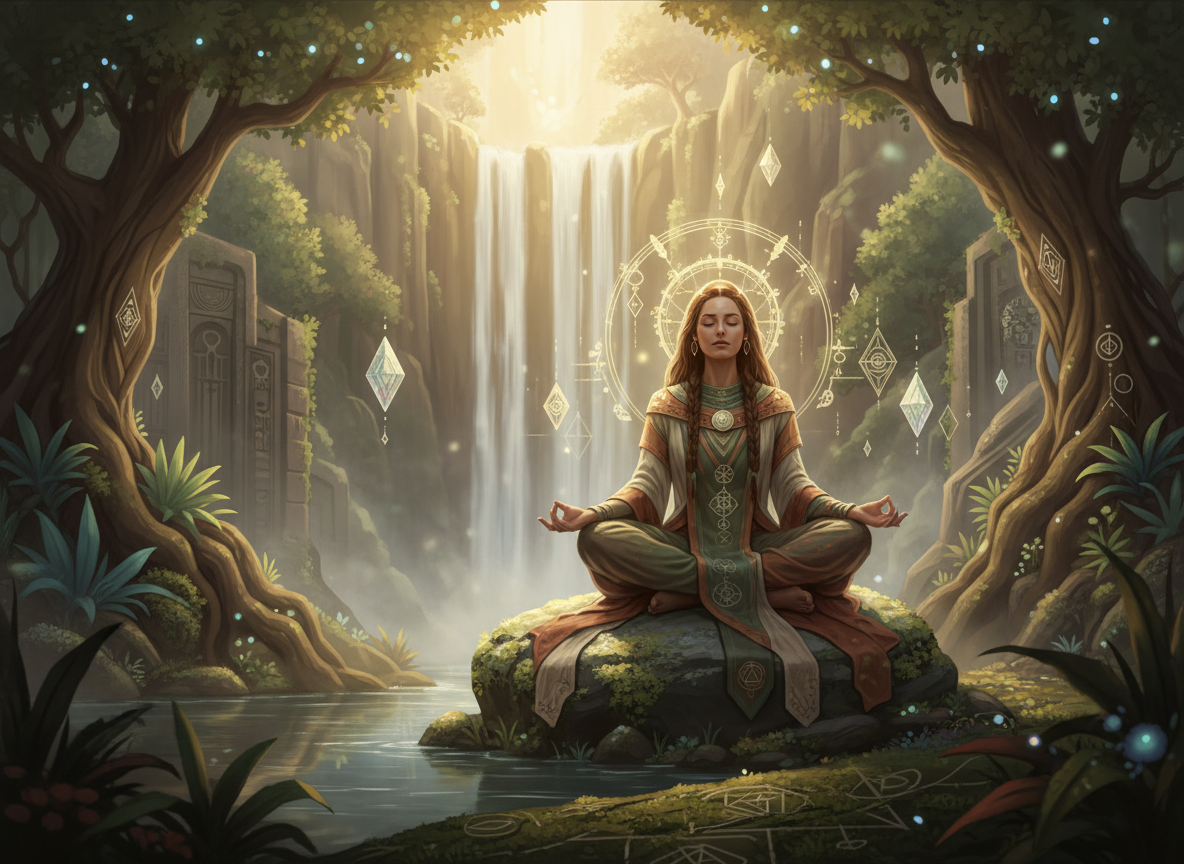
Meditation is the intentional turning inward.
A gentle settling of attention that allows the mind to soften, revealing the stillness already present beneath thought.
Mindfulness is presence in motion.
The ability to remain aware within daily life—observing thoughts, emotions, and sensations without resistance or identification.
Together, these practices cultivate clarity, emotional steadiness, and an embodied sense of awareness that is not dependent on circumstances.
They are not about controlling the mind, but about no longer being controlled by it.

What Begins to Shift
With consistent practice, subtle but profound changes unfold:
• Greater emotional resilience and nervous system regulation
• Increased mental clarity and intuitive insight
• A deeper sense of ease within the body
• More authentic connection in relationships
• A growing recognition of awareness as your true ground
Life does not become free of challenge—but it becomes less reactive, less effortful, and more spacious.
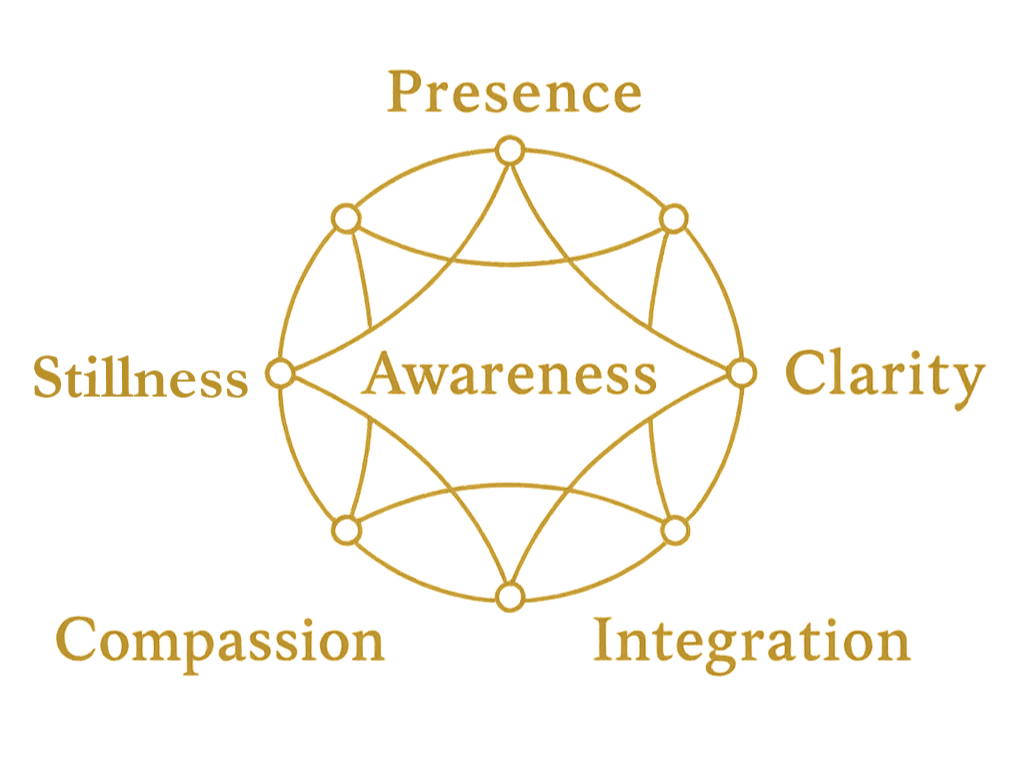
Remembering What You Are
Meditation and mindfulness are not paths toward becoming someone new.
They are pathways of undoing—of releasing identification with the stories, roles, and mental habits that obscure what is already whole.
Beneath thought, beneath effort, beneath identity, there is a natural state of presence that does not need to be achieved—only recognized.
Here, experience is met as it is.
Here, clarity replaces compulsion.
Here, awareness remembers itself.
A Quiet Integration
This practice does not remove you from the world.
It returns you to it—more grounded, more perceptive, more alive.
Not striving to win life.
Not resisting its challenges.
But learning how to be with it from a place of inner stillness.
FAQ
-
Meditation is a formal practice to quiet the mind, often done sitting in stillness. One can focus on the breath, count, stay aware of their physical senses, or repeat a mantra.
While there are many ways to settle back into the body and return to stillness, attention can then be placed on the space between thoughts. This space and stillness then deepens into simple awareness, or presence.
Mindfulness, on the other hand, is the skill of staying aware and present in every activity, on or off the meditation cushion.
-
Even 5 minutes daily can begin to shift your inner state. The key is consistency over duration. Start small and expand as your practice grows. As you practice, returning to presence and stillness becomes easier and easier. You can then tap into that inner peace and silence no matter what is going on around you!
-
Not at all. The goal isn’t to stop thoughts but to notice them without getting caught up. The last thing we want to do when mediating is resisting our thoughts! Instead, each time you shift your attention back to the moment (using breath, mantra, or a focus on various senses). Each time you return to the present, you strengthen your “mindfulness muscle.”
-
Yes! Studies show regular meditation lowers blood pressure, improves sleep, strengthens immunity, and reduces stress hormones — real buffs for your physical system. Emotional health also improves, as we become less reactive and more conscious of our responses to life.
-
The ego fears silence because stillness reveals its illusions. Thoughts, along with all symbology, keep our minds busy and frequently focused on the past or imagined future. Only through presence are we able to realize our true self.
With gentle persistence, the resistance fades, and peace arises organically as that is our natural state!
-
Meditation is a powerful tool for neuroplasticity — your brain’s ability to reorganize itself, forming new neural pathways. Every time you pause, observe your thoughts, and choose presence over reaction, you’re training your mind to respond differently.
This process allows you to:
Decondition old patterns – break loops of fear, judgment, and limiting beliefs.
Heal emotional wounds – create space for unresolved emotions to surface and release.
Reconnect to your true self – the awareness beyond thought, untouched by past conditioning.
In essence, meditation acts like an inner “debugging tool” — clearing outdated programming and revealing the stillness and clarity of your original state. Over time, you no longer identify with the mind’s chatter but rest in the awareness that observes it.
These Q&A’s are mere stepping stones. The real understanding emerges only in practice and stillness.
Explore Further
✧ Guided meditations
✧ Mindfulness practices for daily life
✧ Reflections on presence, awareness, and the quiet mind
🎧 Check out our free guided meditations here.